These Strange New Minds - How AI Learned to Talk and What It Means
Av Christopher Summerfield
| 2026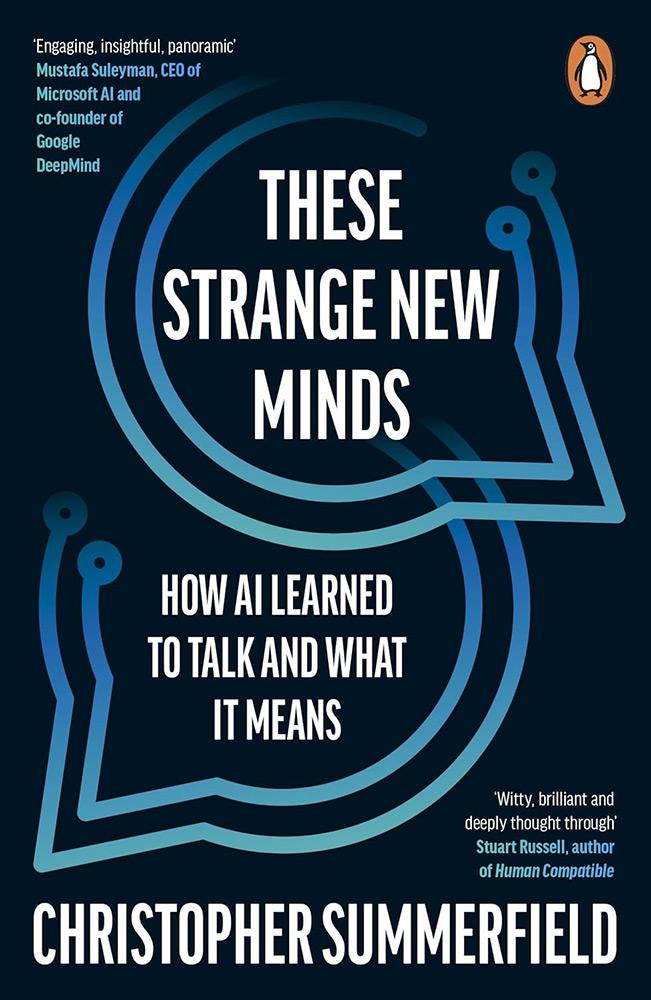
| Finns i lager? | ||
|---|---|---|
| Webblager | ||
| Stockholm | Hämta i butik | |
| Göteborg | Hämta i butik | |
| Malmö | Hämta i butik | |
| Linköping | Hämta i butik | |
Stunning advances in digital technology have introduced a new wave of human-like AI systems. Chatbots like ChatGPT, Claude, and Gemini are already reshaping economies, challenge democracies, and reshaping society in unpredictable ways. And soon, these AI systems could make autonomous decisions on their users' behalf, transforming everything we do. Understanding how they work is crucial.
Can AI systems think, know, and understand?
Could they manipulate or deceive you, and if so, what might they make you do?
Whose interests do they represent?
When will they be able to move beyond words and take action in the real world?
Neuroscientist and AI researcher Christopher Summerfield explores these questions, charting AI's evolution from early ideas in the seventeenth century to today's deep neural networks. His book is the most accessible, up-to-date, and authoritative exploration of this radical technology. With an understanding of AI's inner workings, we can address the existential question of our age: can we look forward to a technological utopia, or are we writing ourselves out of history?
Can AI systems think, know, and understand?
Could they manipulate or deceive you, and if so, what might they make you do?
Whose interests do they represent?
When will they be able to move beyond words and take action in the real world?
Neuroscientist and AI researcher Christopher Summerfield explores these questions, charting AI's evolution from early ideas in the seventeenth century to today's deep neural networks. His book is the most accessible, up-to-date, and authoritative exploration of this radical technology. With an understanding of AI's inner workings, we can address the existential question of our age: can we look forward to a technological utopia, or are we writing ourselves out of history?